


The agent responsible for leptospirosis is a spirochete of the species Leptospira. The 3 main species in Europe are: Leptospira interrogans, Leptospira kirschneri and Leptospira borgpetersenii. These species may belong to different serovars according to their surface antigens: Australis, Canicola, Grippotyphosa, Icterohaemorrhagiae, etc.
The rodents but also small mammalian are to be considered as the main reservoir of the disease. They are a healthy carrier of leptospirosis that is excreted in their urine.
The bacterium is found in the environment where it can survive several months with favourable conditions (warm and humid).
Dogs become infected when their mucous membranes or injured skin meet the pathogen. The incubation period is about 7 days. Leptospirosis can occur in several forms: superacute, acute, subacute, and chronic. Usually, the first clinical signs are not very specific: anorexia, abatement, fever. Subsequently, the animal frequently develops acute renal and/or hepatic failure, which can be fatal.
Haemorrhagic gastroenteritis can also be observed. The superacute form causes rapid death of the animal (within a few hours).
It is often necessary to hospitalise the animal to stabilise it (fluid therapy, management of complications due to renal failure, management of gastrointestinal disorders, etc.). Although life-threatening, treatment is available as leptospires are sensitive to antibiotics. The earlier the antibiotic treatment is started, the better the chances of survival of the animal.
Several vaccines are available, however, none of them are instead of is 100% effective in preventing infection and the onset of clinical signs.
Several serologic methods exist:
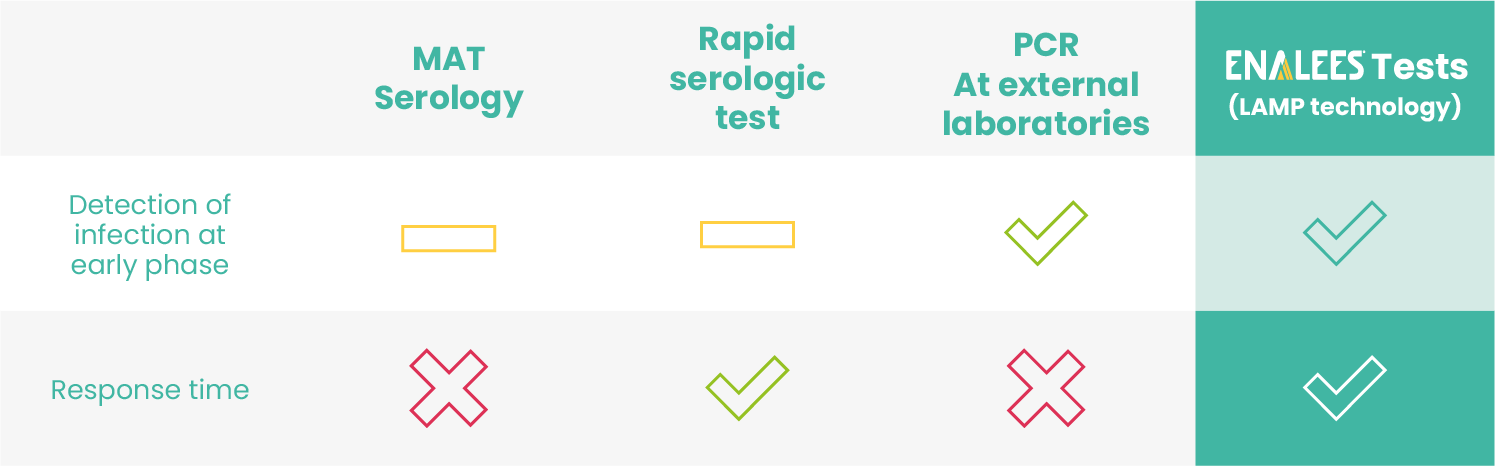
It may take 1-2 weeks after infection before the antibody level is detectable, which may delay the final diagnosis.
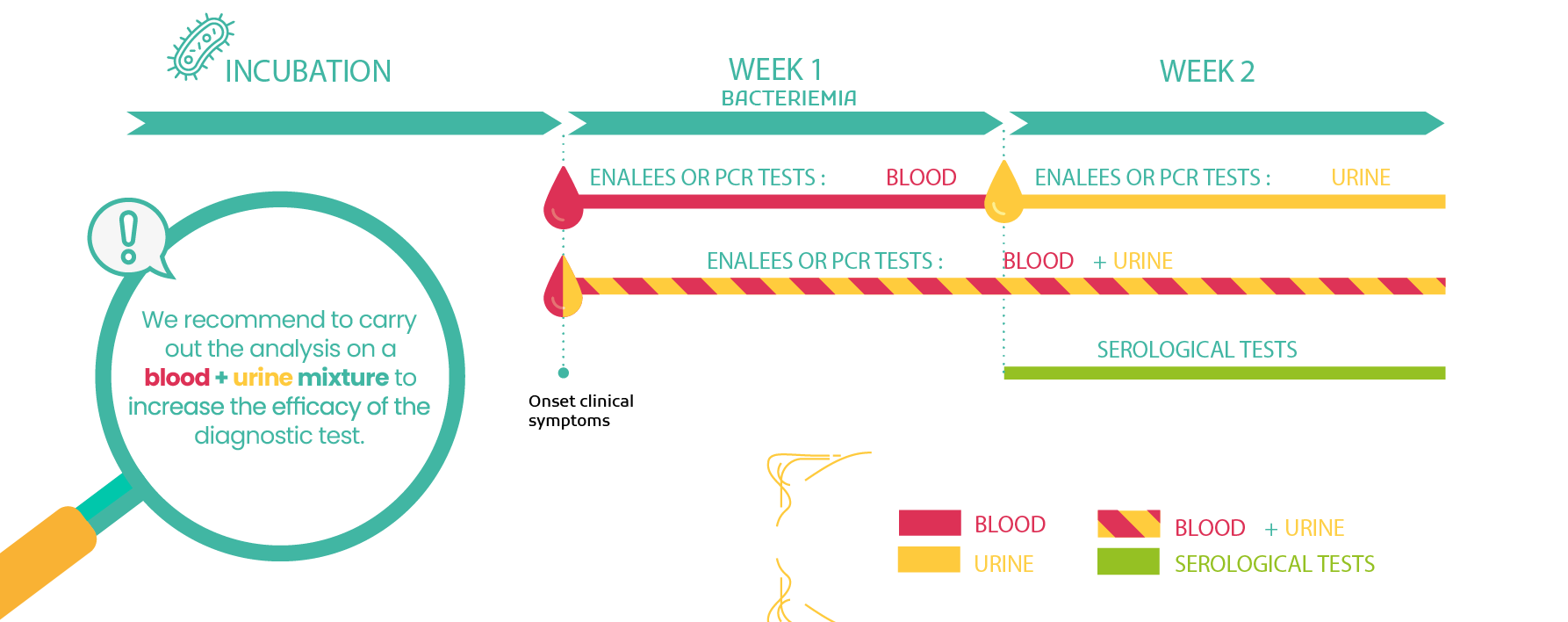
PCR is a very sensitive and specific technique, which amplifies the genome of the bacterium. It can therefore be used from the early phases of infection. PCR testing for leptospirosis can be performed on blood and urine.
Bacteremia lasts an average of 7 days (4-12 days after the onset of clinical signs). The increase in the titre of agglutinating antibodies allows the elimination of leptospires from the bloodstream. However, the spirochetes are not completely eliminated and will be found mainly in 2 target organs: the kidneys and the liver. They can then be detected in the urine from one week after the appearance of clinical signs.
It is highly recommended to test for the pathogen by PCR in the blood within the first week after the onset of clinical signs and then in the urine.
Our tests use isothermal
PCR technology: LAMP technology which directly detects the DNA of the pathogen.
SENSITIVITY
Astéria Leptospira detects the whole pathogen strains responsible of leptospirosis.
RAPIDITY
Its sensitivty is similar
to the PCR one but point-of-care results are obtained in 30 minutes.
ANIMAL WELFARE
The dog can be isolated
& treated the same day. The pet owner is immediately informed of the state of health.
Enalees has developed a test that allows blood and urine to be mixed, without loss of sensitivity. It is also possible to perform this test on blood or urine only.
 Download the newsletterDiscover the test
Learn how rapid molecular diagnostics improve the management of equine influenza outbreaks in veterinary hospitals and equine practices. ...

Enalees has been officially recognized as a BEVA (British Equine Veterinary Association) Partner in Education for 2025!This partnership reflects our commitment to supporting the professional developme...

A central platform designed to organise clinic operations, make test selection easier and help teams focus their added value on clinical practice....

Learn why LAMP PCR is transforming veterinary diagnostics by delivering fast, reliable results directly within the veterinary practice....

Throughout the year, Enalees takes part in the main conferences in the field of diagnostics, so that we can meet you, talk to you and present our results through posters and lectures!Here is a list of...