

FCoVs are large, spherical, single-stranded RNA enveloped viruses belonging to the Alphacoronavirus genus, and exist in two forms:
The intestinal form (FECV) is the most common, but during viral replication, mutations can occur, transforming FECV into FIPV. This process is more prevalent in environments where cats live in groups, such as catteries.
The literature also indicates that predisposing factors such as genetic susceptibility, young age and sources of stress could be the cause.
| By excretion in faeces (shared litter and reinfection by contaminated litter). | ||
| By adult cats asymptomatic carriers (FIPV strains are rarely excreted in the faeces, unlike FECV strains). | ||
| Survives for up to 7 weeks in dry environments | (carpets and dried faeces in litter trays), and is transmitted by clothing, toys or brushes. |
| Begins two days after infection and lasts for several weeks to several months. It may be intermittent or chronic. |
| The virus is usually inactive At room temperature within 24-48hours. | ||
| Elimination with the use of most of detergents and disinfectants. | ||
| Survives for up to 7 weeks in dry environments | (carpets and dried faeces in litter trays), and is transmitted by clothing, toys or brushes. |
Infection of cats with enteric virus usually results in hidden infection or light enteric symptoms. FIP, however, is characterised by fibrinous serositis with protein-rich effusions in body cavities (‘wet form’) and/or granulomatous-necrotising inflammatory lesions in several organs (‘dry form’). FIP is the leading viral cause of death in domestic cats.
Feline peritonitis (FIP) comes in two forms:
In both cases, the pleomorphic disease is progressive and often fatal within a few weeks, in the absence of rapid diagnosis and appropriate treatment.
Diagnosis of FIP relies on a combination of clinical and biological methods. However, the distinction between benign FCoV (FECV) and pathogenic mutated strains (FIPV) remains complex. There are a number of tools available to veterinary professionals:
These methods, although valuable, often need to be used as complementary tools to refine the diagnosis and to correlate with the cat's clinical symptoms.
| To meet the growing need of veterinary professionals to diagnose and isolate a cat infected with feline coronavirus, Enalees offers the Asteria® Feline Coronavirus test. This is a rapid and reliable diagnostic test based on LAMP (Loop-mediated isothermal amplification) technology. Our rapid test detects the virus in blood or effusion fluid when dry or wet feline infectious peritonitis is suspected. The Asteria® Feline Coronavirus test provides a result in 40 minutes on the presence of feline coronaviruses, helping the veterinary professional to diagnose and provide personalised, reasoned care for patients. This tool makes it easier to manage suspected cases in correlation with clinical symptoms, and provides vital support for cat owners and breeders, while improving the outlook for management of this complex viral pathology, which remains difficult and costly to treat. |
For further reading
- ‘GS-441524 is currently the optimal treatment for FIP in France’ - https://www.depecheveterinaire.com/le-gs-441524-est-actuellement-le-traitement-optimal-contre-la-pif-en-france_679C4E803667A465.html
Strangles remains one of the most contagious equine respiratory diseases. Discover how rapid molecular testing supports early detection and outbreak control....
Learn how rapid molecular diagnostics improve the management of equine influenza outbreaks in veterinary hospitals and equine practices. ...

Enalees launches new Rhéa® respiratory panel: a new clinical reference for LAMP PCR diagnosis of respiratory diseases in livestock ...
Learn why LAMP PCR is transforming veterinary diagnostics by delivering fast, reliable results directly within the veterinary practice....
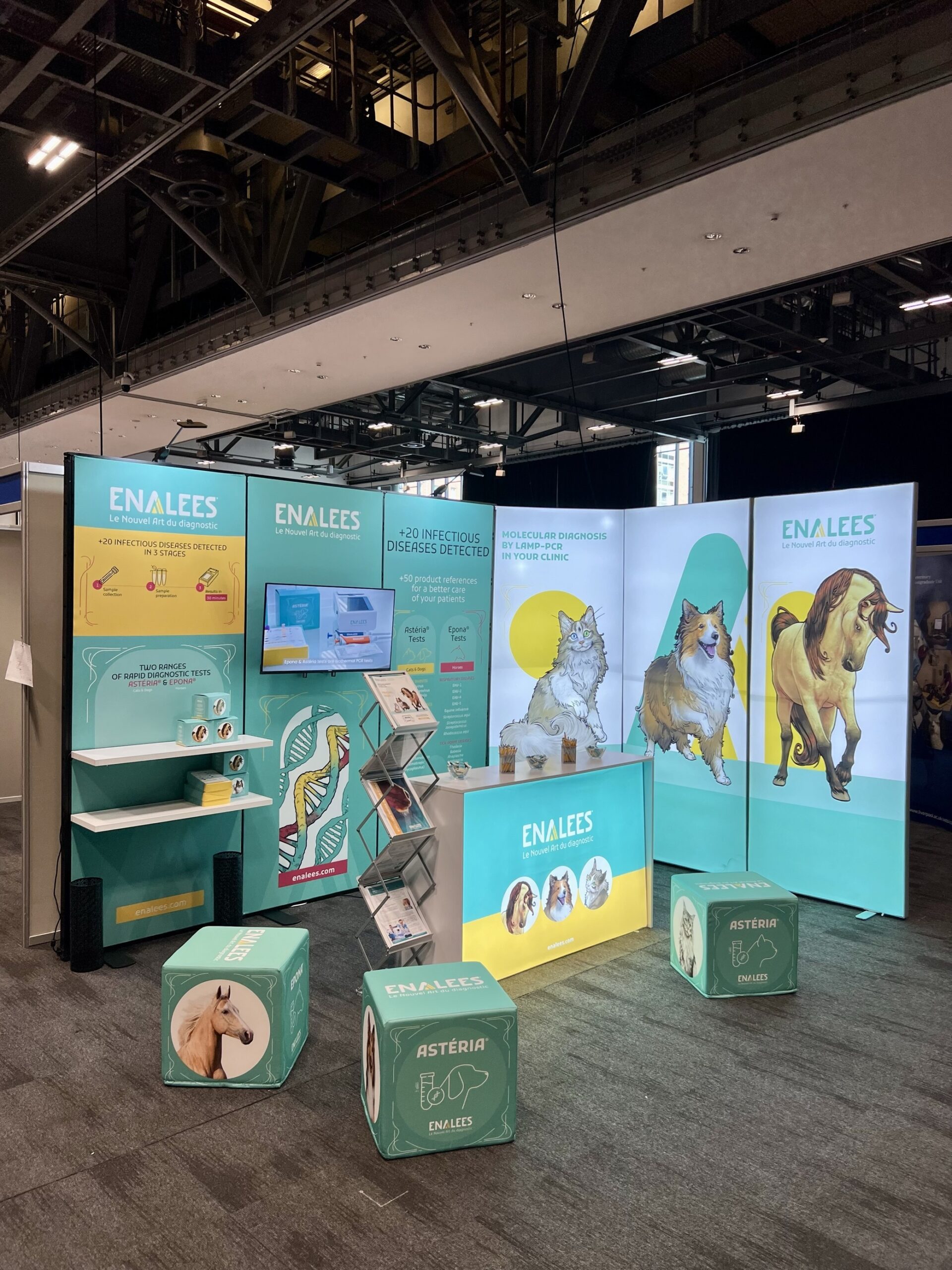
Throughout the year, Enalees takes part in the main conferences in the field of diagnostics, so that we can meet you, talk to you and present our results through posters and lectures!Here is a list of...